
A few years ago, AI seemed like a technology of the future. Today, the situation has changed dramatically. AI is being implemented in companies of any scale.
Competition is growing. Staff shortages are acute. Businesses need to optimize costs. Therefore, entrepreneurs choose automation. It is becoming the main development tool. AI lies at the foundation of digital transformation. Companies process data faster. They make accurate decisions. The influence of the human factor decreases.
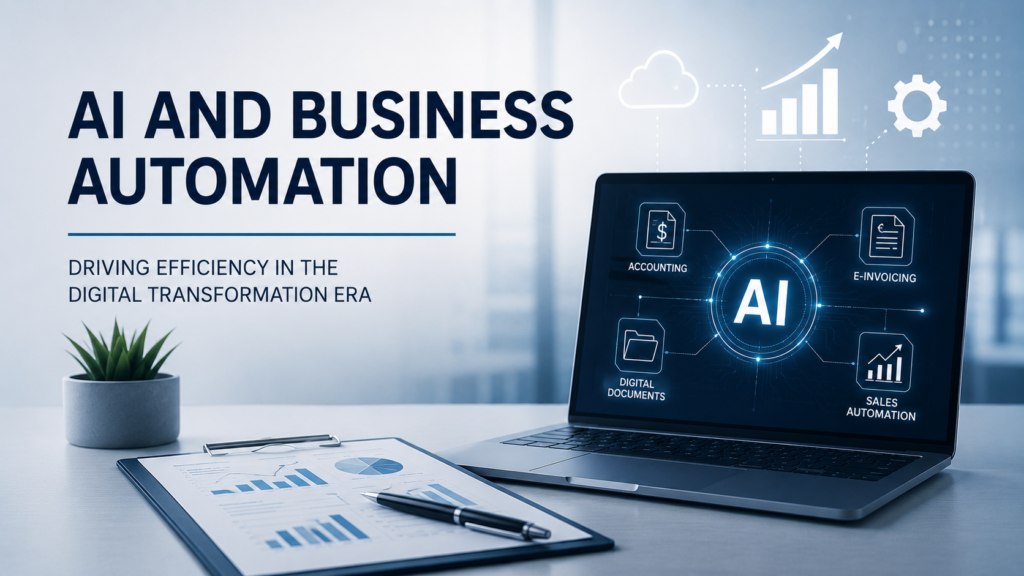
Today, AI for accounting and sales automation are in high demand. Electronic document management is also important.
Why Automation Is Becoming a Key Competitiveness Factor
Modern business generates enormous volumes of information. Customer requests and financial documents require processing. Manual process management creates problems.
Operating expenses remain high. Data entry errors occur. Documents are approved slowly. Employee productivity drops. Scaling the business becomes difficult. Processes lose transparency.
Automation eliminates these limitations. The company performs a larger volume of work. At the same time, the number of employees does not grow. AI integration provides special value. Automation covers several departments at once.
AI for Accounting: A New Role for the Finance Department
How Artificial Intelligence Changes Accounting Processes
Accounting requires significant resources. Specialists work with documents daily. They process invoices and payments. Modern AI solutions automate these tasks.
Machine learning reads data from invoices. The system classifies financial transactions. AI verifies the correctness of details. Algorithms detect duplicate documents. The system identifies errors and discrepancies. AI generates accounting entries independently. Specialists receive already structured information.
Advantages of Accounting Automation
AI implementation provides important advantages:
- Error reduction. AI minimizes the influence of the human factor.
- Faster document processing. Today, this takes just minutes.
- Increased transparency of operations. Management sees real-time current data. This improves managerial decisions.
- Cost reduction. Automation optimizes the workload on employees. Administrative expenses decrease.
Sales Automation: Increasing Conversion and Efficiency
Main Problems of Traditional Sales
Managers spend time on routine. They process similar requests. They prepare commercial proposals. They enter data into the CRM. They search for customer information. They generate reports. The effectiveness of customer interaction drops. The cost of attracting a deal grows.
How AI Helps Sell More
AI automates the customer interaction cycle. The system analyzes incoming requests. Algorithms identify promising customers. AI predicts the probability of purchase. The system generates personalized proposals. It identifies reasons for refusals. Chatbots automate communication.
AI finds hidden patterns in data. The business achieves high conversion. Resource costs decrease at the same time.
Electronic Document Management: The Foundation of a Digital Company
Why Business Moves Away from Paper Processes
Paper-based document management slows down business. Documents are often lost. Approval takes a long time. Paper storage requires costs. Manual entry errors occur. Execution control becomes complicated. Electronic document management (EDM) transfers interaction to a digital environment.
What the Company Gains After EDM Implementation
Modern EDM systems provide fast results:
- Documents are approved quickly.
- Information is stored centrally.
- The system controls document versions.
- Business processes become transparent.
- Archiving costs decrease.
EDM integration provides additional effect. It connects ERP systems, CRM, and accounting.
Electronic Invoices as a Standard of Modern Business
The Transition to e-Invoicing Becomes a Global Trend
Electronic invoices have become a mandatory element of business interaction. The EU actively promotes digital exchange standards. The number of companies using e-invoicing is growing.
Electronic invoices accelerate financial operations. Administrative expenses are reduced. Data accuracy increases. The risk of fraud decreases. The company complies with legislative requirements.
The Role of Artificial Intelligence in Invoice Processing
AI automatically verifies details. The system matches invoices with contracts. AI monitors payment deadlines. Algorithms detect anomalies. The system forecasts cash flows. The finance department receives a high level of control. Document processing time is significantly reduced.
Digitalization of Business Processes: A Comprehensive Approach
What Digitalization Means in Practice
Digitalization is not limited to individual programs. It is the creation of a unified digital environment. All processes are interconnected. They operate on the basis of current data.
Transformation covers finance management and sales. It includes marketing and human resources management. It also covers procurement, logistics, and document management. The main task is to create a unified information ecosystem.
How to Assess Business Readiness for Transformation
An audit is important before implementing technologies. It is necessary to identify operations performed manually. Places where delays occur should be found. It is important to identify the most costly processes. It is necessary to understand what data is used for decisions. Automation of repetitive operations provides the greatest effect.
Artificial Intelligence as a Strategic Development Tool
AI has ceased to be just an innovation. For business, it increases profit. It optimizes costs and accelerates growth.
Companies invest in accounting automation. They implement digital document management. This provides tangible advantages:
- Operating expenses are reduced.
- Employee productivity grows.
- Customer experience improves.
- The number of errors decreases.
- Decisions are made faster.
- Company competitiveness increases.
The level of digitalization determines the ability of business to adapt.
Conclusion
Process automation is no longer a trend. It is a strategic necessity for companies. AI for accounting forms the foundation of a digital company. The same applies to sales and document management.
The sooner a business implements these tools, the faster it gains advantages. The company reduces costs and grows profit. The quality of management improves noticeably.