
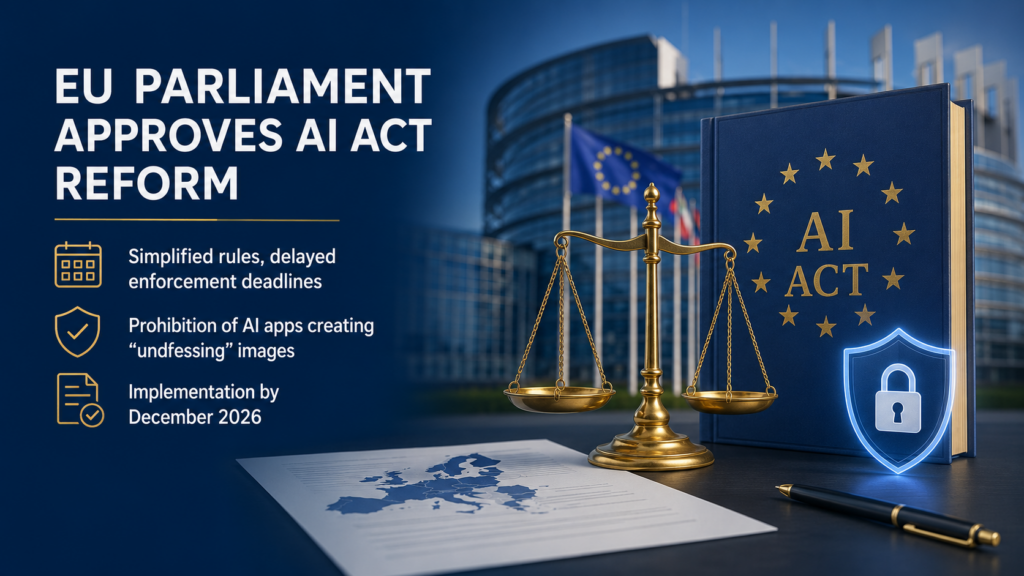
The European Parliament recently approved amendments to the AI Act. This marks a significant shift in digital regulation. The final vote recorded 423 in favor and 57 against, with 174 abstentions. These changes were integrated into the broader Digital Omnibus package. Ultimately, this legislative update streamlines the implementation of artificial intelligence rules.
Postponed Mandates for High-Risk AI Systems
The European Union has officially delayed the compliance deadlines for high-risk artificial intelligence systems. This postponement specifically affects two distinct categories of technology.
The implementation deadlines are as follows:
- Autonomous AI systems must comply by December 2, 2027.
- Safety component systems integrated into products must comply by August 2, 2028.
The latter category primarily involves systems embedded within products governed by existing EU sectoral legislation.
Extended Timelines for AI Content Labeling
Regulatory requirements for labeling artificially generated content have also been deferred. This extension provides technology companies with additional preparation time.
The new labeling deadlines are as follows:
- Systems released to the market before August 2, 2026, must meet labeling standards by December 2, 2026.
Prohibition of “Undressing” and Non-Consensual AI Applications
The European Union has enacted a comprehensive ban targeting specific categories of artificial intelligence applications. This legislation strictly forbids the development and deployment of harmful digital tools.
The ban covers the following categories:
- Generation of child sexual abuse material (CSAM).
- Creation of intimate images without the subject’s explicit consent.
- Deployment of applications designed to generate “undressing” imagery.
This represents the first explicit prohibition of its kind within the European Union, fundamentally safeguarding individual privacy rights.
Corporate Compliance and Enforcement Deadlines
Technology companies must achieve full compliance with these new mandates. The absolute deadline for implementation is December 2, 2026.
Organizations must utilize this transition period to execute several critical operational adjustments:
- Immediate removal of all prohibited applications from the market.
- Comprehensive updates to internal content moderation policies.
- Deployment of automated systems to detect and prevent violations.
Failure to meet these requirements will result in substantial financial penalties.
Conclusion
The European Parliament has successfully streamlined the AI Act without compromising its core protective measures. The prohibition on “undressing” applications officially takes effect on December 2, 2026. Businesses should leverage this grace period to ensure full regulatory alignment. Proactive preparation significantly mitigates the risk of severe financial sanctions. Ultimately, the AI Act continues to define the global standard for artificial intelligence governance.
Official European Commission information contains full AI Act details.